

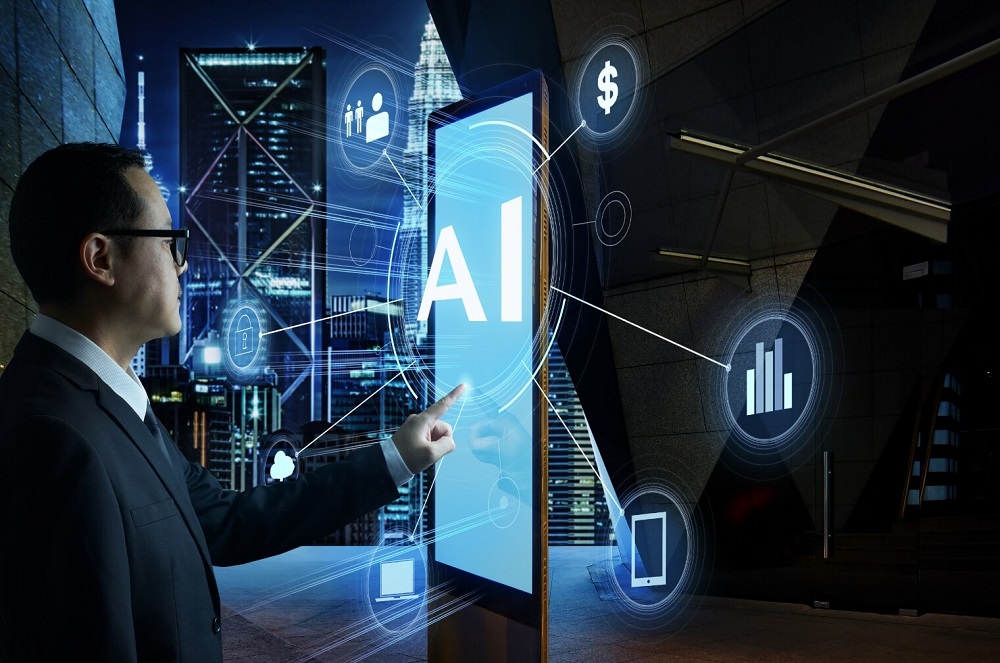
The landscape of modern commerce is undergoing a foundational shift driven by the maturity of artificial intelligence. Once confined to theoretical laboratory environments or narrow, highly technical applications, artificial intelligence has matured into a foundational operational layer for enterprise organizations worldwide. Businesses are no longer asking if they should integrate artificial intelligence into their workflows; instead, they are mapping out how quickly they can deploy it to maintain market competitiveness.
The true impact of artificial intelligence lies in its ability to process massive datasets, recognize complex patterns, and execute repetitive tasks at a scale and speed that human operators cannot match. By automating routine workflows, predicting market trends, and personalizing interactions, artificial intelligence allows human capital to shift away from administrative maintenance and toward high-value strategic execution. This article explores the precise mechanisms through which artificial intelligence is reorganizing modern business operations across primary industry sectors.
Supply Chain Management and Predictive Logistics
Global supply chains are inherently volatile, susceptible to geopolitical shifts, weather disruptions, and fluctuating consumer demand. Traditional forecasting methods rely heavily on historical sales data, which frequently fails to account for real-time market anomalies. Artificial intelligence transforms this dynamic by introducing predictive logistics and autonomous inventory management.
Machine learning models ingest hundreds of distinct data streams simultaneously. These streams include historical sales trends, live weather forecasts, social media sentiment analysis, economic indicators, and shipping vessel telemetry. By analyzing these variables, artificial intelligence can accurately predict demand surges or shipping delays weeks before they manifest physically.
-
Inventory Optimization: Artificial intelligence algorithms dynamically adjust warehouse stock levels based on localized demand predictions. This minimizes the capital tied up in excess inventory while virtually eliminating the risk of stockouts during peak purchasing seasons.
-
Dynamic Routing: For distribution and delivery networks, artificial intelligence calculates optimal transit paths in real time. If an accident or weather front disrupts a planned highway route, the system automatically reroutes vehicles to minimize fuel expenditure and preserve delivery timelines.
-
Predictive Maintenance: Industrial machinery and delivery fleets utilize IoT sensors connected to central artificial intelligence platforms. By tracking minute variations in vibration, temperature, and acoustic outputs, the software identifies mechanical degradation before an actual breakdown occurs, allowing maintenance teams to service equipment during scheduled downtime.
Customer Experience and Hyper-Personalization
Customer support centers and marketing departments have historically struggled with a fundamental trade-off: scaling operations typically meant reducing the quality of personal interaction. Artificial intelligence resolves this challenge by providing tools that deliver hyper-personalized experiences to millions of customers simultaneously.
Natural language processing has advanced to a point where conversational artificial intelligence interfaces handle complex, multi-step customer inquiries without human intervention. Unlike early rule-based chatbots that frustrated users with rigid, pre-written responses, modern artificial intelligence agents understand intent, context, and emotional sentiment, allowing them to resolve issues empathetically and accurately.
When a customer interaction requires nuance beyond the capability of an automated system, artificial intelligence acts as an internal co-pilot for human agents. The software analyzes the live conversation, instantly pulls relevant account histories or technical documentation from the corporate knowledge base, and suggests optimal resolution paths to the representative. This drastically reduces average handling times and improves first-contact resolution rates.
Furthermore, artificial intelligence drives modern recommendation engines. By evaluating a consumer past browsing history, purchase frequency, localized weather patterns, and demographic cohorts, artificial intelligence algorithms present tailored product suggestions and pricing models. This level of granular personalization drives higher conversion rates and fosters long-term brand loyalty.
Financial Forecasting and Risk Mitigation
In the financial sector, operational efficiency relies entirely on the accuracy of data analysis and speed of risk assessment. Artificial intelligence excels in these environments by replacing manual spreadsheets and retrospective financial reviews with real-time auditing and predictive modeling.
Corporate financial planning teams utilize artificial intelligence to construct sophisticated scenario analyses. Instead of modeling a static three-year financial plan, organizations use artificial intelligence to run thousands of parallel simulations, testing how changes in interest rates, raw material costs, or labor markets would impact corporate profitability. This enables executive teams to make highly informed capital allocation decisions.
-
Automated Fraud Detection: Legacy fraud detection systems relied on static rules, which sophisticated bad actors easily bypassed. Artificial intelligence systems analyze transaction patterns continuously, establishing a behavioral baseline for legitimate accounts. When a transaction deviates from this baseline, the system flags or blocks the transaction within milliseconds.
-
Credit Risk Assessment: For lending institutions and B2B enterprises extending credit lines, artificial intelligence evaluates creditworthiness using non-traditional data points. By reviewing cash flow patterns, utility payment histories, and supply chain health, algorithms offer a more accurate representation of risk than standard credit scores alone.
-
Accounts Payable Automation: Artificial intelligence removes the administrative friction from invoicing processes. Computer vision and natural language processing extract data from incoming invoices, match the line items against purchase orders, verify delivery receipts, and schedule payments without requiring manual data entry.
Human Resources and Talent Lifecycle Management
The operational health of any business depends on its ability to attract, develop, and retain top talent. Artificial intelligence is optimizing the entire employee lifecycle, allowing human resource departments to move away from administrative paperwork and focus on workforce strategy and organizational culture.
During the recruitment phase, talent acquisition teams utilize artificial intelligence to screen thousands of resumes. By focusing on specific skills, project outcomes, and structural competencies, these systems surface the most qualified candidates for human review. This significantly reduces the time-to-hire metric and helps mitigate unconscious bias by evaluating candidates strictly on objective merit.
Once hired, employees experience personalized professional development managed by artificial intelligence platforms. These systems assess an individual current skill set against their long-term career goals and the strategic needs of the company. The software then curates tailored learning modules, tracking progress and suggesting specific internal projects where the employee can apply their developing skills.
Retention strategies have also become proactive through data analytics. Artificial intelligence tools analyze anonymized engagement data, vacation usage patterns, and performance metrics to identify signs of employee disengagement or burnout. By alerting management to turnover risks before an employee submits a resignation letter, companies can intervene with targeted support or adjustments to the work environment.
Frequently Asked Questions
How does artificial intelligence affect data privacy compliance like GDPR or CCPA?
Implementing artificial intelligence requires rigorous data governance frameworks to ensure compliance with privacy laws. Because these systems ingest massive amounts of data, businesses must implement strict data anonymization, encryption, and access controls. Furthermore, many regulations grant individuals the right to know how automated systems make decisions about them, meaning companies must deploy explainable artificial intelligence models rather than opaque systems where the decision-making logic cannot be audited or verified.
What infrastructure is required for a small business to adopt artificial intelligence?
Small businesses do not need massive on-premise supercomputers or custom-built data centers to leverage artificial intelligence. The growth of cloud-based software-as-a-service models allows small enterprises to access advanced artificial intelligence capabilities through existing platforms. Tools for CRM, accounting, and marketing now feature native artificial intelligence functionalities, meaning a small business simply needs clean internal data and basic API integrations to begin optimizing their operations.
Will artificial intelligence completely replace the need for human project managers?
No, artificial intelligence will change the nature of project management rather than eliminate it. Artificial intelligence excels at tracking deadlines, allocating resources based on historical timelines, and flag-marking operational bottlenecks. However, project management fundamentally relies on negotiation, leadership, stakeholder communication, and empathetic conflict resolution. Humans will utilize artificial intelligence as an administrative assistant, freeing up time to focus on team alignment and strategic problem-solving.
How can businesses prevent algorithmic bias in their artificial intelligence models?
Algorithmic bias occurs when an artificial intelligence system learns flawed patterns from historically biased training data. To prevent this, companies must audit their datasets for historical imbalances, utilize diverse development teams, and continuously monitor model outputs for disparate impacts. Implementing regular algorithmic audits and setting up ethical review boards ensures that the software remains fair and objective over time.
What is the difference between standard automation and artificial intelligence in operations?
Standard automation follows rigid, pre-defined rules, performing identical tasks repeatedly without deviation. For example, a basic automation script can copy data from an email into an excel sheet. Artificial intelligence, however, possesses cognitive adaptability. It can interpret unstructured data, learn from new inputs, make contextual judgments, and improve its performance over time without a programmer needing to rewrite the underlying code.
How do you measure the financial return on investment for artificial intelligence deployments?
Measuring the return on investment involves tracking specific operational KPIs before and after implementation. Common metrics include reduction in processing times, decrease in inventory holding costs, improvement in customer retention rates, and lower error rates in financial forecasting. Additionally, organizations should calculate the value of human hours reclaimed from administrative tasks and redirected toward revenue-generating activities.