

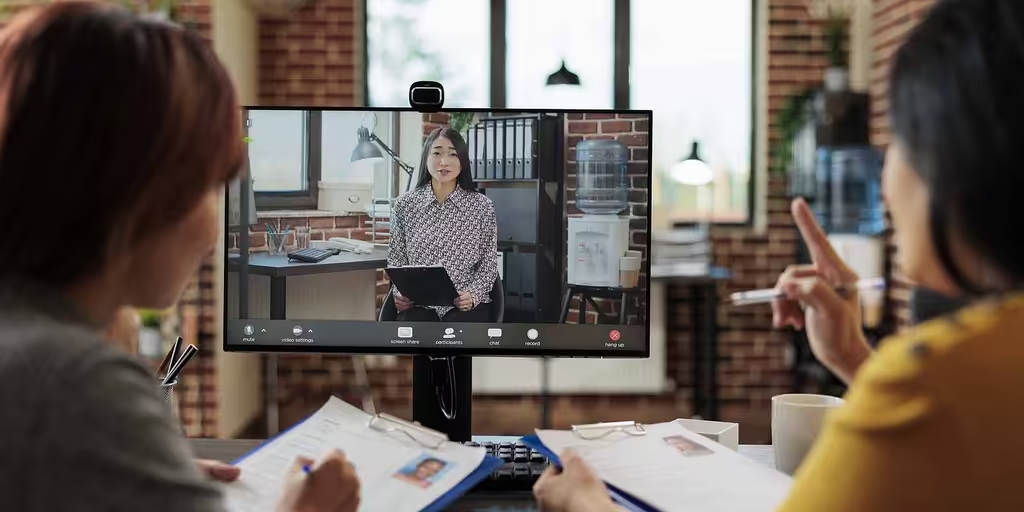
Remote and hybrid work models have shifted from temporary solutions to long-term workforce strategies. Organizations that hire without adapting to these models often struggle with misalignment, poor engagement, and early attrition. Effective hiring for remote and hybrid teams requires a deliberate approach that evaluates skills, mindset, communication ability, and cultural fit beyond traditional office-based criteria.
Understand the Role’s Work Structure Before Hiring
Before sourcing candidates, clearly define whether the role is fully remote, hybrid, or location-dependent. Ambiguity at this stage leads to mismatched expectations and hiring friction later.
Clarify key elements upfront:
-
Required overlap hours across time zones
-
Frequency of in-office presence for hybrid roles
-
Level of autonomy versus collaboration expected
-
Tools and systems the employee will use daily
Candidates who understand how work actually happens are more likely to perform well and stay longer.
Prioritize Self-Management and Accountability Skills
Remote and hybrid environments demand a higher level of individual responsibility. Hiring purely on technical expertise can backfire if candidates lack the discipline to manage their workload independently.
Look for evidence of:
-
Time management and prioritization skills
-
Ownership of deliverables without constant supervision
-
Comfort working asynchronously
-
Consistent follow-through on commitments
Behavioral interview questions that explore past remote or independent work experiences help surface these traits naturally.
Adapt Interview Processes for Virtual Evaluation
Traditional interviews often fail to capture how candidates operate in distributed settings. Virtual hiring should simulate real working conditions as closely as possible.
Effective interview adjustments include:
-
Video interviews to assess communication clarity
-
Short task-based assessments completed remotely
-
Collaborative exercises using shared documents or tools
-
Scenario-based questions focused on remote challenges
These methods provide insight into how candidates think, communicate, and execute without physical proximity.
Hire for Communication, Not Just Competence
In remote and hybrid teams, communication gaps quickly turn into productivity issues. Strong written and verbal communication skills are essential, regardless of role seniority.
Evaluate communication by observing:
-
Clarity and structure in written responses
-
Ability to explain complex ideas concisely
-
Responsiveness during the hiring process
-
Willingness to ask clarifying questions
Clear communicators reduce misunderstandings and help teams move faster with fewer meetings.
Expand Talent Pools While Managing Location Constraints
One of the biggest advantages of remote hiring is access to a broader talent pool. However, legal, tax, and compensation considerations still matter.
Balance flexibility with structure by:
-
Defining approved hiring regions early
-
Aligning compensation bands with role value, not geography alone
-
Partnering with compliant payroll or employment services
-
Being transparent about location-related limitations
This approach keeps hiring scalable without creating operational risks.
Design Hiring Criteria Around Team Dynamics
Hybrid teams often blend in-office and remote employees, which can create imbalance if hiring decisions are not intentional. New hires should complement existing workflows and team rhythms.
Consider team-level factors such as:
-
Collaboration styles within the team
-
Time zone distribution
-
Experience levels across locations
-
Existing communication norms
Hiring with the whole team in mind improves cohesion and reduces friction.
Strengthen Onboarding as Part of the Hiring Strategy
Hiring does not end with an offer letter. Remote and hybrid employees form their first impressions during onboarding, which heavily influences retention and performance.
Effective onboarding for distributed teams includes:
-
Clear documentation and role expectations
-
Structured introductions to teammates and stakeholders
-
Early access to tools, systems, and knowledge bases
-
Defined milestones for the first 30, 60, and 90 days
Candidates who see a strong onboarding plan are more confident in their decision to join.
Build Long-Term Hiring Systems, Not One-Off Fixes
Sustainable remote and hybrid hiring requires repeatable systems rather than reactive decisions. Standardized processes improve consistency and reduce bias.
Focus on building:
-
Clear role templates for remote and hybrid positions
-
Interview scorecards aligned with distributed work skills
-
Centralized documentation for hiring managers
-
Feedback loops to refine hiring criteria over time
Strong systems help organizations scale teams without sacrificing quality.
FAQ
What skills are most important when hiring remote employees?
Self-management, communication, accountability, and adaptability are critical alongside technical skills.
How do hiring strategies differ for hybrid teams versus fully remote teams?
Hybrid hiring must account for in-office coordination, location expectations, and team balance between remote and on-site employees.
Can remote hiring increase employee retention?
Yes, when expectations are clear and onboarding is strong, remote roles often improve satisfaction and reduce turnover.
How can companies assess cultural fit remotely?
Through behavioral interviews, scenario-based questions, and observing how candidates communicate and collaborate virtually.
Is it risky to hire across multiple time zones?
It can be managed effectively by setting clear overlap hours, communication norms, and realistic delivery timelines.
Should compensation differ for remote and in-office roles?
Compensation should primarily reflect role value and impact, with geography considered carefully and transparently.
What hiring mistakes should companies avoid with remote teams?
Common mistakes include vague role definitions, overemphasizing technical skills, and underinvesting in onboarding.