


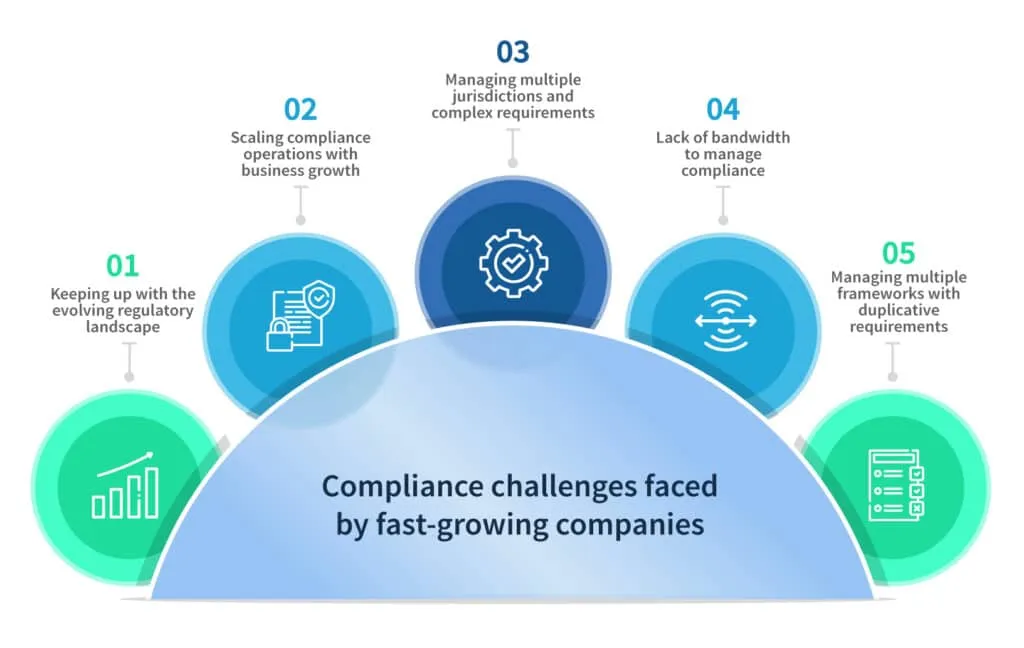
Rapid growth is a positive signal for any business, but it often brings complex compliance challenges that are easy to underestimate. As companies scale operations, enter new markets, hire aggressively, and adopt new technologies, regulatory obligations multiply. What once worked for a small team can quickly become inadequate, exposing the organization to legal, financial, and reputational risks.
Understanding these challenges early helps leaders build compliance practices that support growth instead of slowing it down.
Expanding Regulatory Requirements
As companies scale, they are often subject to new laws and regulatory frameworks that did not previously apply.
Common triggers include:
-
Entering new countries or regions with different legal systems
-
Crossing employee headcount thresholds that activate labor regulations
-
Expanding into regulated industries or customer segments
Without proactive monitoring, businesses may unknowingly violate requirements related to taxation, employment law, data protection, or financial reporting.
Managing Compliance Across Multiple Jurisdictions
Geographic expansion increases complexity because regulations vary significantly across regions. A policy that is compliant in one location may conflict with rules elsewhere.
Challenges often include:
-
Differing labor laws and employee benefits requirements
-
Local tax structures and reporting obligations
-
Industry-specific licensing or operational rules
Rapidly scaling companies must balance global consistency with local compliance, which requires careful coordination and legal insight.
Lack of Formalized Policies and Controls
Early-stage companies often rely on informal processes that work well at small scale. Growth exposes the limits of this approach.
Common gaps include:
-
Inconsistent documentation and approvals
-
Unclear ownership of compliance responsibilities
-
Limited internal controls over financial or operational decisions
Without standardized policies, compliance becomes reactive rather than systematic, increasing the risk of errors and violations.
Resource Constraints and Competing Priorities
Scaling organizations frequently prioritize revenue, hiring, and product development. Compliance initiatives may be delayed due to limited budgets or staffing.
This can result in:
-
Overloaded legal or finance teams
-
Delayed audits or compliance reviews
-
Inadequate training for new employees
When compliance is treated as an afterthought, small issues can escalate into costly problems.
Data Privacy and Information Security Pressures
Growth often involves collecting more customer, employee, and partner data. With this comes heightened responsibility for protecting sensitive information.
Key challenges include:
-
Adapting to evolving data protection regulations
-
Managing third-party vendors with access to data
-
Implementing security controls across expanding systems
Failing to address data privacy early can lead to regulatory penalties and loss of trust.
Maintaining Ethical Standards During Rapid Hiring
Scaling companies may onboard large numbers of employees in a short period. This can dilute company culture and increase compliance risks.
Potential issues include:
-
Inconsistent understanding of ethical guidelines
-
Insufficient training on regulatory responsibilities
-
Weak enforcement of codes of conduct
Clear communication and ongoing education are essential to maintain compliance as teams grow.
Keeping Up With Regulatory Change
Regulatory environments are not static. Rapidly growing companies often struggle to track changes while managing expansion.
Effective approaches include:
-
Assigning clear ownership for compliance monitoring
-
Leveraging external advisors when needed
-
Using compliance management tools to track obligations
Staying informed allows businesses to adapt without disruption.
Building Scalable Compliance Frameworks
The most successful scaling companies treat compliance as a growth enabler, not a barrier.
Best practices include:
-
Designing policies that can scale with the organization
-
Automating compliance reporting where possible
-
Embedding compliance into everyday decision-making
A proactive approach reduces risk while supporting sustainable expansion.
FAQ
What is the biggest compliance risk for rapidly scaling companies?
The biggest risk is failing to recognize new regulatory obligations that arise as the company grows, especially across jurisdictions or employee thresholds.
When should a scaling company invest in formal compliance programs?
Ideally, compliance frameworks should be built before rapid expansion begins, not after issues arise.
How does international expansion impact compliance requirements?
International growth introduces multiple legal systems, requiring localized policies for labor, tax, and operational compliance.
Can compliance slow down business growth?
Poorly managed compliance can create friction, but well-designed compliance systems support faster and safer growth.
What role does leadership play in compliance during scaling?
Leadership sets the tone by prioritizing ethical behavior, allocating resources, and enforcing accountability.
How can small compliance teams manage growing workloads?
Automation, standardized processes, and external expertise help small teams handle increased demands.
Is compliance only a legal responsibility?
No. Compliance is a shared responsibility involving leadership, operations, HR, finance, and technology teams.